Choose the Right EVA Case Type
Different products require different levels of protection, portability, storage, and internal organization. Choosing the right EVA case type helps improve product usability, protection, and presentation.
EVA cases can be designed with different combinations of:
- Protective outer structures.
- Carrying handles or straps.
- Foam or molded inserts.
- Mesh pockets and elastic straps.
- Compartments for accessories.
- Custom branding and presentation details.
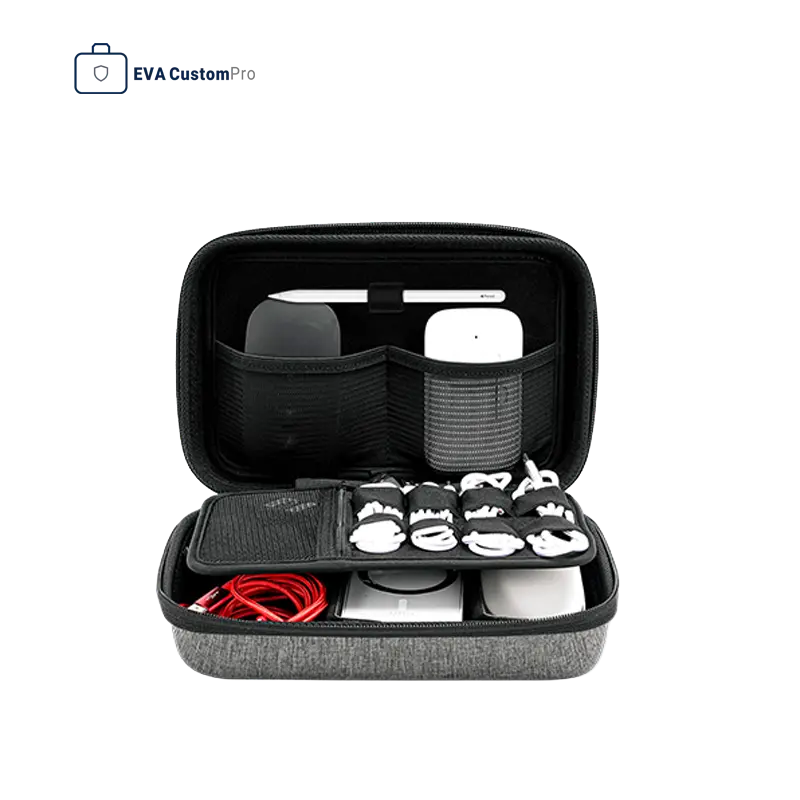
Different Products Need Different Case Structures
Different products require different levels of protection, portability, storage, and internal organization. Choosing the right EVA case type helps improve product usability, protection, and presentation.
EVA cases can be designed with different combinations of:
- Protective outer structures.
- Carrying handles or straps.
- Foam or molded inserts.
- Mesh pockets and elastic straps.
- Compartments for accessories.
- Custom branding and presentation details.
The best EVA case structure should match how the product is protected, carried, stored, and accessed.
Key Factors
- Protection level.
- Carrying frequency.
- Product and accessory quantity.
- Interior layout.
- Storage and transport conditions.
- Brand presentation.
Main EVA Case Types
The three main EVA case types below describe the primary purpose of the case. Interior organization, such as compartments, pockets, straps, or custom inserts, can be added according to the product and use scenario.
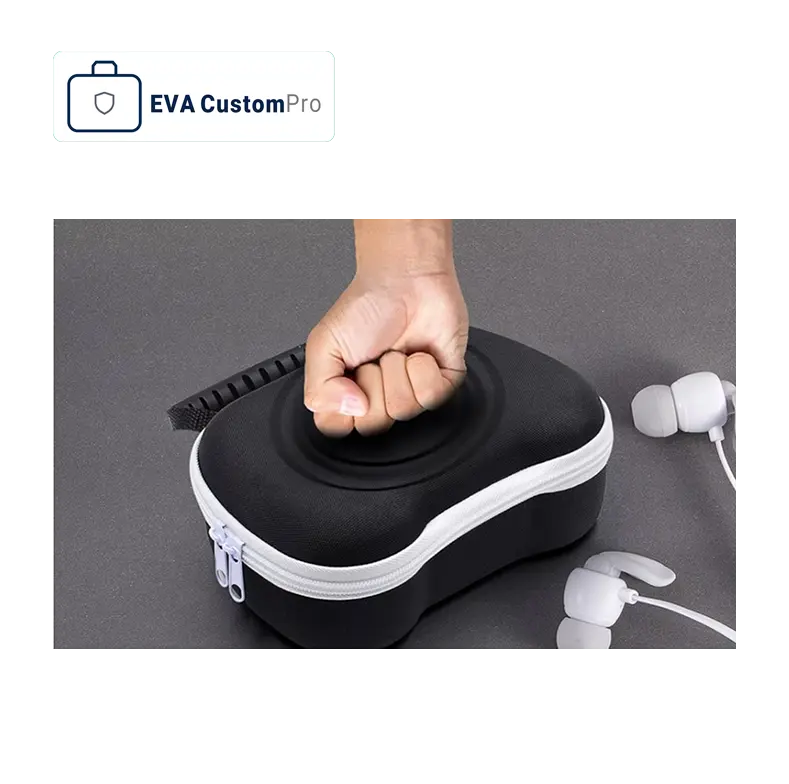
Hard EVA Case
Rigid protection for products that need stronger structure, impact resistance, and a secure internal fit.
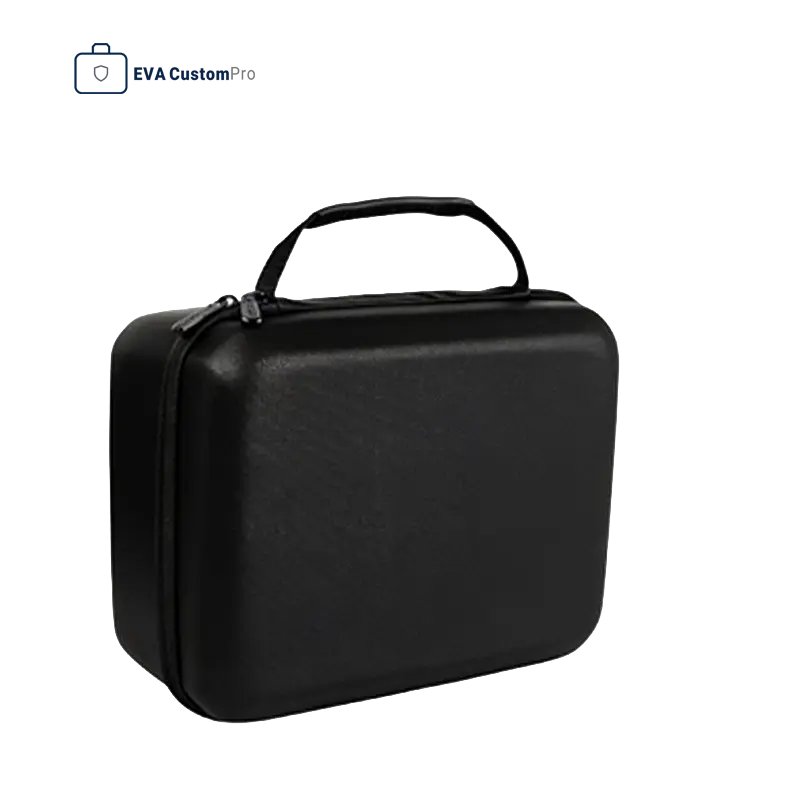
EVA Carrying Case
Portable protection for products that are moved frequently and need to be easy to handle during transport or everyday use.
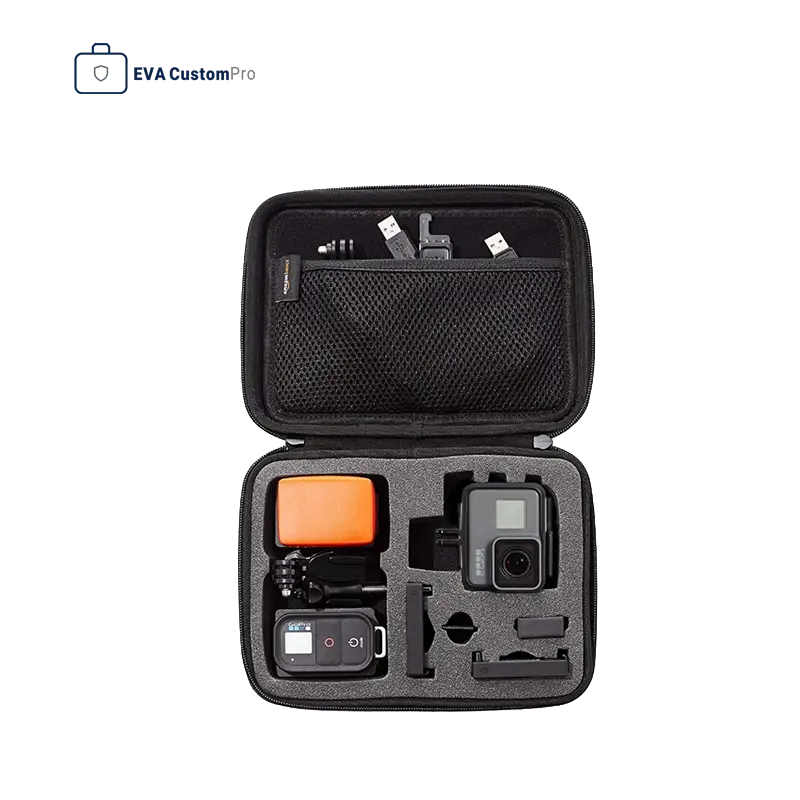
EVA Storage Case
Practical protection and organized storage for products, kits, and accessories. Storage cases can also function as organizer cases when they include compartments, mesh pockets, elastic straps, or custom inserts for easier sorting and access.
What does a hard EVA case do best?
A hard EVA case is best when the main goal is stronger protection. It works well for products that need a rigid outer structure and a more secure internal fit.
When is a carrying case the better choice?
An EVA carrying case is a good choice when the product is moved frequently. Handles, straps, compact dimensions, and a practical interior layout can make the case easier to carry and use on the go.
What is an EVA storage case best for?
An EVA storage case is designed to keep products, kits, and accessories protected and organized in one place. It can include an open cavity, compartments, mesh pockets, molded inserts, or other interior features depending on the product requirements.
Can an EVA storage case also be an organizer case?
Yes. Many EVA storage cases also function as organizer cases. In this context, storage describes the main purpose of keeping products and accessories protected, while organizer describes the internal layout used to separate, secure, and access those items.
How to Choose the Right Case Type
Start with your product size, required protection level, and end-use scenario. The right case should support how the product will actually be used, not just how it looks.
Choose based on:
- Required protection level.
- Transport frequency
- Product size and shape.
- Accessory quantity.
- Interior organization.
- Storage and transport conditions.
- Brand presentation.
How do I choose the right EVA case type?
Begin with the product’s main use scenario:
- Choose a hard EVA case when stronger structure and impact protection are the main priorities.
- Choose an EVA carrying case when the product is moved frequently.
- Choose an EVA storage case when the product, kit, or accessories need to be protected and kept together.
- Add organizer features when accessories need to be separated, fixed, or accessed quickly.
Which case structure is best for my product?
The best structure depends on the product, accessories, transport frequency, protection level, and user experience. A case can combine several functions—for example, a hard EVA storage case with a carrying handle and a custom organizer insert.
Match the Structure to the Use Case
The right EVA case type depends on how the product will be protected, carried, stored, and presented to end users.
Organizer features are not limited to a separate case type. They can be integrated into carrying cases, storage cases, and custom EVA cases.
Hard EVA Case → high protection
EVA Carrying Case → portable use
EVA Storage Case → storage and organization
Hard EVA Case → high protection
Which case is better for travel use?
For frequent travel or daily transport, an EVA carrying case is usually a practical choice because it is easy to handle and can be designed with handles, straps, pockets, or compact internal layouts.
If the product is fragile, a hard EVA case with a custom insert may provide better protection during transport.
Which case is better for storage?
An EVA storage case is suitable for keeping a product, kit, or group of accessories protected and organized. The interior can be designed as an open cavity, divided compartment, mesh-pocket layout, or precision-molded insert.
Which case is better for quick access?
A case with organizer features is usually better for quick access. Mesh pockets, elastic straps, dividers, and molded slots can help users identify and retrieve accessories more easily.
Compare Product Types
Use the table below to quickly compare the main differences between each EVA case structure and find the best fit for your project.
| Case Type | Protection | Portability | Interior Layout | Best For |
|---|---|---|---|---|
| Hard EVA Case | High | Good | Precision molded tray | Sensitive products that need stronger protection |
| EVA Carrying Case | High | Very good | Foam + pocket layout | Products used on the move |
| EVA Storage Case | Medium to high | Good | Compartments / slots | Long-term storage and space efficiency |
| EVA Organizer Case | Medium to high | Good | Mesh pockets / elastic straps / dividers / molded slots | Quick access, easy identification, and retrieving accessories |
Note
One case can combine several functions. For example, a product may be both:
- A hard EVA case.
- An EVA carrying case.
- An EVA storage case.
- An EVA organizer with custom compartments.
The best description depends on the main user need and the features that support it.
Why compare EVA case types before choosing?
A direct comparison helps you identify the main priority of your project before discussing dimensions, materials, and interior details. It also makes it easier to choose a structure that fits the real product use scenario.
What is the difference between an EVA storage case and an organizer case?
An EVA storage case describes the main purpose of protecting and storing a product, kit, or group of accessories. An organizer case or organizer interior emphasizes how the contents are separated, fixed, and accessed.
Many EVA storage cases include organizer features, so the two terms can describe the same product from different perspectives.
Can one EVA case combine different functions?
Yes. A single case can combine hard-shell protection, carrying features, organized storage, and a custom interior insert. The final structure should be selected based on the product, accessory layout, transport frequency, and user requirements.
Need a Custom Structure?
If your product needs a unique size, internal layout, insert design, or branding detail, we can develop a custom EVA case structure around your requirements.
A custom case may include:
- Custom dimensions.
- Molded foam or EVA inserts.
- Compartments and dividers.
- Mesh pockets and elastic straps.
- Cable channels and accessory slots.
- Custom logos, colors, and surface details.
- Packaging-ready product presentation.
When should I request a custom structure?
You should request a custom structure when standard case sizes or interiors do not fit your product, accessory list, or presentation requirements.
Custom development is especially useful for:
- Special product shapes.
- Mixed product kits.
- Products with multiple accessories.
- Fragile or sensitive equipment.
- Products that require fixed internal positioning.
- Cases that need a specific brand presentation.
Built for OEM / ODM Projects
We support custom EVA case development from structure planning and sample production to quality control and repeat manufacturing.
Project Support
- OEM and ODM capability.
- Custom structure development.
- Sample and prototype production.
- Interior insert design.
- Production quality control.
- Export experience.
- Repeat order support.
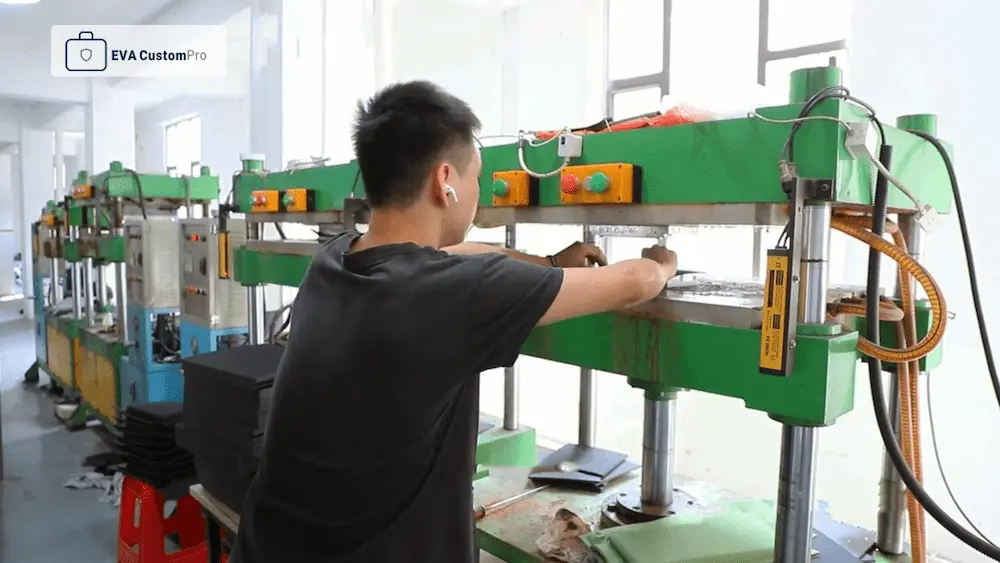
Do you support OEM/ODM orders?
Yes. We support OEM and ODM projects for EVA case design, customization, sampling, and production.
Can you recommend a structure for my project?
Yes. We can recommend a suitable case structure after reviewing your product dimensions, accessory list, protection requirements, transport frequency, and usage scenario.
Frequently Asked Questions
A hard EVA case focuses on stronger structure and impact protection. An EVA carrying case focuses on portability and convenient transport. A case can combine both functions when the product needs protection while being moved frequently.
An EVA storage case is designed to protect and store products, kits, or accessories in one place. It may have an open cavity, compartments, mesh pockets, foam, molded inserts, or other interior features.
Not always, but the two can overlap. Storage describes the main purpose of keeping products and accessories protected, while organizer describes the internal layout used for sorting and quick access.
Yes. We can add compartments, dividers, mesh pockets, elastic straps, cable slots, or custom inserts to help organize the contents.
Yes, we can design inserts based on your product and accessory layout.
It depends on protection, portability, storage, and use scenario.
Yes, we can suggest the best case type after reviewing your product details.
Yes, we support both OEM and ODM projects.
Find the Right EVA Case Solution for Your Industry
Send us your product details, and we’ll recommend the best case structure and customization options.
EVA CustomPro™ Engineering Audit Summary | Digital Fast-Track
Page Topic
- Product: Custom EVA Cases — protective carrying and storage solutions built from high-density EVA (Ethylene-Vinyl Acetate), available in hard shell, carrying, and storage configurations with optional organizer features — engineered for product protection, portable transport, organized storage, and professional brand presentation across multiple B2B applications.
- Audience: Product developers, brand owners, sourcing managers, and B2B buyers across electronics, medical, tool, eyewear, and audio industries seeking to identify the optimal EVA case structure for their product, kit, or accessory set.
- Page Purpose: To serve as a structure-focused gateway page — helping buyers understand the relationship between product use scenarios and case structures, compare three main case types (Hard, Carrying, Storage) and organizer features, and guide them toward the appropriate structure sub-page or direct inquiry for personalized recommendations.
Case Structure Logic — Three Main Types + Organizer Features
- Three Main Case Types: The page organizes EVA case structures into three primary categories based on the main use priority — Hard EVA Case (stronger structure and impact protection), EVA Carrying Case (easy transport and frequent handling), EVA Storage Case (protected and organized storage for products, kits, and accessories).
- Organizer as Features, Not a Separate Type: Unlike previous versions where "Organizer" was presented as a fourth independent type, V3.1 reframes organizer as a set of interior features — compartments, mesh pockets, elastic straps, dividers, custom inserts — that can be integrated into any of the three main case types depending on the product and use scenario.
- Functional Overlap: A single case can combine multiple functions — for example, a hard EVA case with a carrying handle and organizer inserts. The page explicitly acknowledges that case types are not mutually exclusive and that the best description depends on the main user need and the features that support it.
- Selection Logic: Buyers are guided to choose based on protection level, transport frequency, product size, accessory quantity, interior organization needs, and brand presentation requirements — with the case structure matching the real use scenario rather than just appearance.
- Key Differentiator: The page shifts from "which of these four types is right for me?" to "what is my main use priority, and which interior features do I need?" — reducing decision friction and acknowledging that real-world applications often combine multiple functions.
Three Main Case Types
- Hard EVA Case: Designed for products that need stronger structure, impact resistance, and a secure internal fit. Best for sensitive or fragile products that require a rigid outer shell and stable internal positioning — with foam or molded inserts providing precision protection.
- EVA Carrying Case: Designed for products that are moved frequently and need to be easy to handle during transport or everyday use. Best for portable applications — with handles, straps, compact dimensions, and practical interior layouts supporting frequent handling.
- EVA Storage Case: Designed to keep products, kits, and accessories protected and organized in one place. Best for long-term storage and organized keeping — with interiors that can include open cavities, compartments, mesh pockets, molded inserts, or other features depending on the product requirements.
- Organizer Features (Cross-Cutting): Compartments, dividers, mesh pockets, elastic straps, cable slots, and custom inserts — applicable to any of the three main case types — supporting sorting, quick access, and visible organization. Organizer features are not limited to a separate case type; they can be integrated into carrying cases, storage cases, and custom EVA cases.
Comparison Framework
- Comparison Dimensions: The page compares case types across four key dimensions — Main Priority (what the case does best), Portability (how easy it is to move), Common Interior Options (what goes inside), and Best For (which scenarios fit each structure) — providing a clear, decision-supportive comparison structure.
- Hard EVA Case Position: Main Priority — strong structure and impact protection; Portability — good; Interior Options — foam, molded insert, protective tray; Best For — sensitive or fragile products.
- EVA Carrying Case Position: Main Priority — easy transport and everyday handling; Portability — very good; Interior Options — pockets, straps, foam, compartments; Best For — products used on the move.
- EVA Storage Case Position: Main Priority — protected and organized storage; Portability — good; Interior Options — open cavity, compartments, mesh pockets, custom inserts; Best For — products, kits, and accessories.
- Organizer Features Position: Main Priority — sorting and quick access; Portability — depends on the case; Interior Options — dividers, pockets, straps, slots, molded inserts; Best For — small parts and frequently used accessories. This row acknowledges that organizer functionality is not tied to a single structure type.
- Functional Combination: The comparison framework explicitly notes that one case can combine several functions — a product can be both a hard EVA case, an EVA carrying case, an EVA storage case, and an organizer with custom compartments, depending on the main user need and the features that support it.
Selection Logic & Decision Support
- Use-Case-Based Selection: Buyers are guided to begin with the product's main use scenario — choose Hard when stronger structure and impact protection are the main priorities; choose Carrying when the product is moved frequently; choose Storage when the product, kit, or accessories need to be protected and kept together; add Organizer features when accessories need to be separated, fixed, or accessed quickly.
- Selection Factors: Seven factors guide the decision — required protection level, transport frequency, product size and shape, accessory quantity, interior organization needs, storage and transport conditions, and brand presentation requirements — ensuring the recommendation is grounded in practical considerations rather than abstract preferences.
- Scenario-Based Guidance: Three diagnostic questions help buyers match structure to use case — "Which case is better for travel use?" (Carrying, or Hard for fragile items), "Which case is better for storage?" (Storage with appropriate interior), "Which case is better for quick access?" (Organizer features) — reducing uncertainty and accelerating page-to-subpage navigation.
- Custom Development Signal: The page includes a clear escalation path to custom development when standard case sizes or interiors do not fit the product, accessory list, or presentation requirements — signaling that customization is available and encouraged for special product shapes, mixed kits, fragile equipment, or cases that need specific brand presentation.
- Escalation Path: For buyers who cannot easily identify their case type fit, a clear escalation path to "Talk to Us" and Customization page — ensuring no buyer is lost due to navigation uncertainty.
Customization & Cross-Site Integration
- Custom Structure Development: Full custom development available when standard case sizes or interiors do not fit product requirements — including custom dimensions, molded foam or EVA inserts, compartments, dividers, mesh pockets, elastic straps, cable channels, accessory slots, custom logos, colors, and surface details — enabling product-specific case solutions.
- Organizer Integration: Organizer features — compartments, dividers, mesh pockets, elastic straps, cable slots, custom inserts — can be added to any case type, enabling buyers to select the outer structure that fits their use scenario while still benefiting from organization-oriented interior layouts.
- Logo Branding: Branding options available across all case types — from logo printing and embossing to custom colors and packaging — with clear pathway to Customization page for detailed branding options.
- Engineering Support: Direct contact pathway to engineering team for buyers who need personalized structure recommendations beyond the standard case type guidance.
- Navigation Flow: Product Types (current) → Hard/Carrying/Storage sub-pages (for structural detail) → Customization (for deeper customization) or Contact (for engineering support) — creating a logical, low-friction path from structure identification to solution execution.
Manufacturing & Trust Signals
- OEM/ODM Capability: Full support for both client-specified designs (OEM) and factory-developed solutions (ODM) — accommodating different project stages and brand requirements across all case types.
- Sample Development: Structured sampling process for design confirmation and fit validation prior to production — reducing risk before committing to bulk orders.
- Quality Control: Multi-stage inspection protocols from incoming materials through final shipment — ensuring consistent quality across production runs regardless of case type or order size.
- Export Experience: Documented experience with international B2B buyers across multiple industries — supporting smooth cross-border transactions and customs documentation.
- Repeat Order Support: Structured production systems designed to support repeat orders with consistent quality and predictable lead times — enabling long-term buyer-supplier relationships.
- Structure Recommendation Support: Explicit signal that the team can recommend a suitable case structure after reviewing product dimensions, accessory list, protection requirements, transport frequency, and usage scenario — reducing buyer uncertainty and accelerating the decision process.
Summary Intent & Value Proposition
- Value Proposition: A structure-focused gateway that bridges the gap between "I need a case for my product" and "which structure is right for my use scenario?" — reducing buyer confusion, acknowledging that real-world applications often combine multiple functions (hard protection + carrying features + organized storage), and guiding buyers toward the most relevant case structure or custom development path with clear decision support.
- Structure Logic: Organizer is reframed as a set of interior features rather than a separate case type — enabling clearer categorization (Hard, Carrying, Storage) while still providing guidance on sorting, access, and organization for buyers who need those capabilities. This approach reduces friction by acknowledging that organizer needs are context-dependent rather than tied to a single structure.
- Decision Support: Equipping buyers with use-case-based selection logic, comparison frameworks, diagnostic questions, and clear entry points to sub-pages — enabling confident navigation from general interest to structure-specific exploration without requiring deep technical knowledge upfront.
- Cross-Site Integration: Purpose-built connections to Hard/Carrying/Storage sub-pages, Customization page, and Contact page — ensuring that buyers who need a standard case type, custom development, or direct engineering support have a clear, friction-free path from structure identification to solution execution.